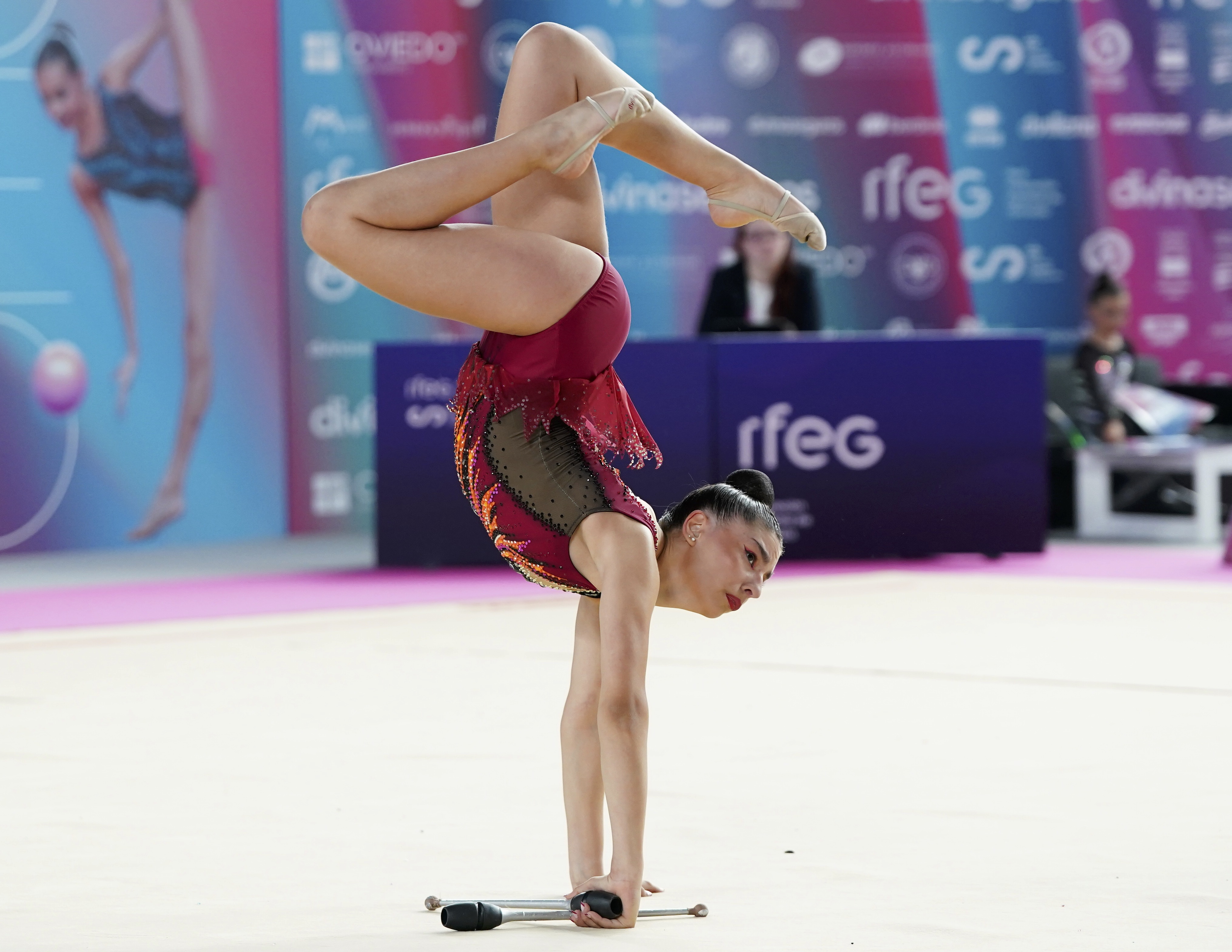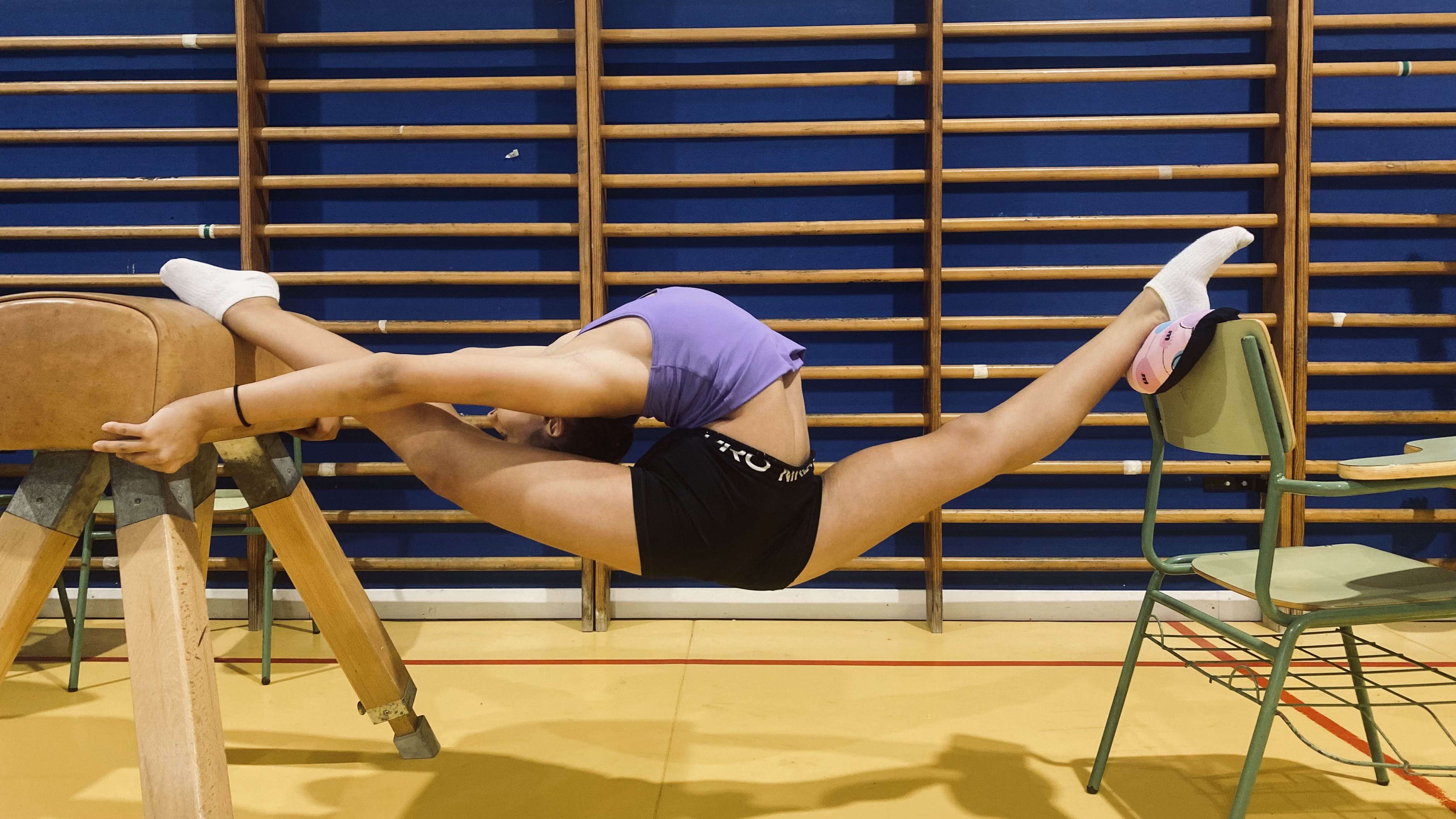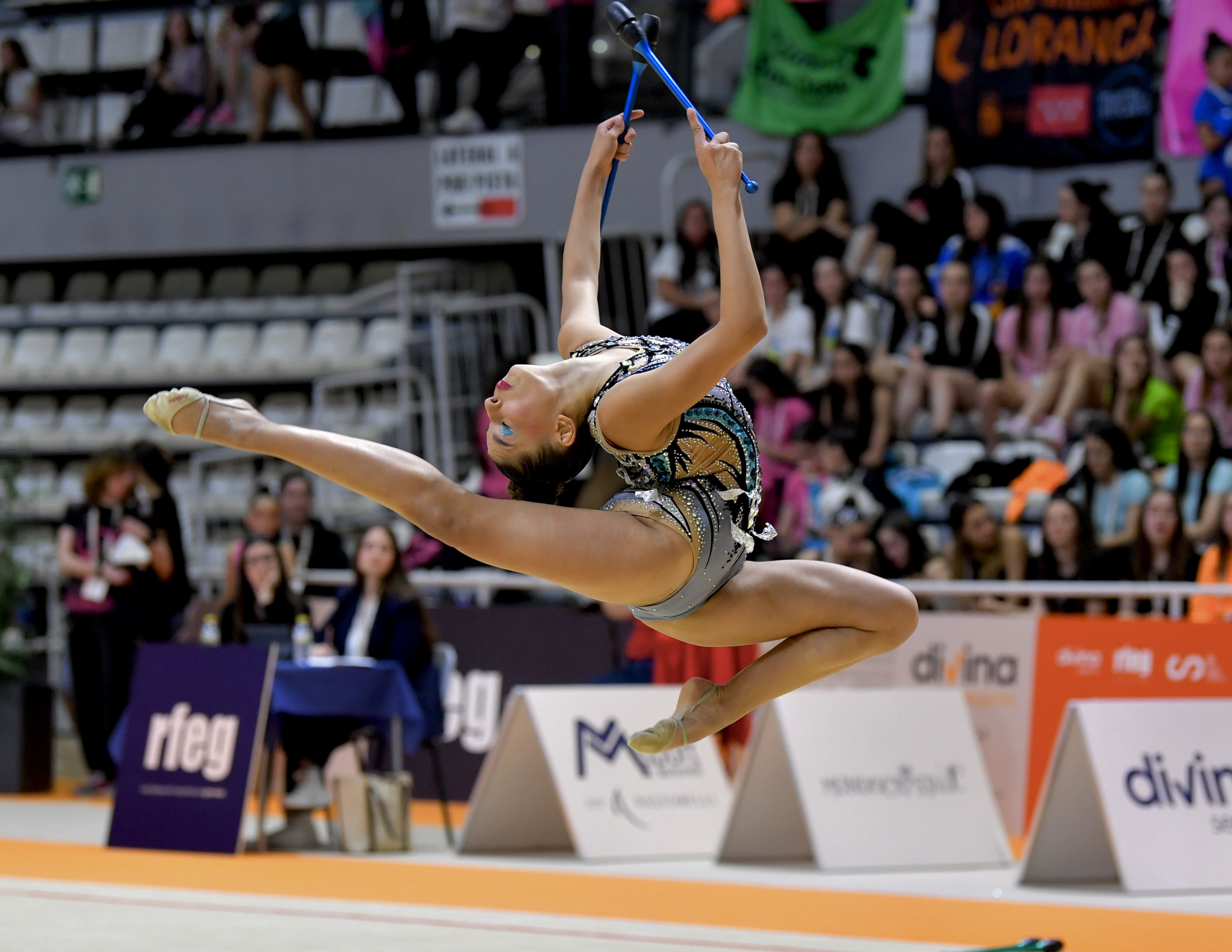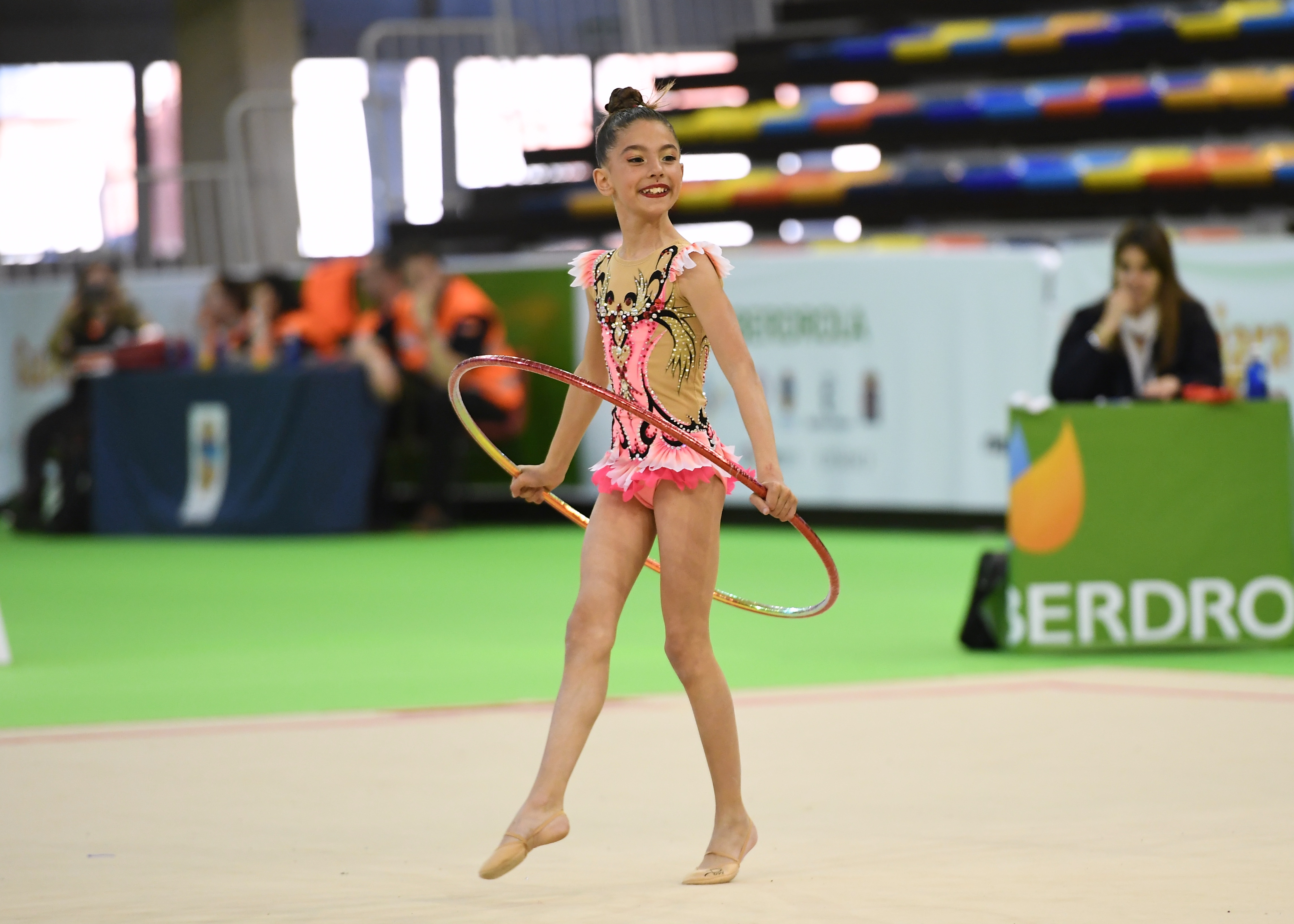


In #Gaztegiro, we discover students from Somorrostro who also excel outside the classroom: in sport, music, the arts or any other activity they are passionate about. On this occasion, we meet Lorea Rubio, a second-year Administrative Management student whose life is closely tied to rhythmic gymnastics.
Lorea was four years old when she started practising rhythmic gymnastics. The decision stemmed from a dream her mother was unable to fulfil: she had always loved the sport and wanted to introduce her daughter to it. Lorea started at a club in Santurtzi, her hometown, before moving through several teams to eventually join the Municipal School of Rhythmic Gymnastics in Castro Urdiales. There she has found a place to develop as a gymnast and compete at national level.
Now 18 and in her second year of the Intermediate Vocational Training course in Administrative Management at Somorrostro, she lives by gymnastics. This season she is competing in both individual and team events: she trains five days a week and puts in an average of over eleven hours of training each week. On Mondays, Wednesdays and Fridays, she spends two and a half hours with the team; on Tuesdays and Thursdays, she spends two hours on individual training. And as soon as she finishes, she starts thinking about the next competition.
One of her fondest memories dates back to 2019. With her team, she secured third place in the Spanish Championships with a five-rope routine. That day was also special for the club: another of its teams came second. “It’s the best day of my life. We all enjoyed it so much,” recalls Lorea.
She is now preparing with her teammates for the Spanish Group Championships, which take place in November. This season they’ll be competing with hoops and ribbons, and Lorea makes no secret of which one she finds most difficult: “The ribbon is the one I like the least.” It’s not hard to see why: you have to keep it moving at all times, prevent it from tangling and control how it reacts to humidity or draughts. The hoop and the ball, on the other hand, are among her favourite apparatus. In December, she hopes to compete in an individual event, the Cup: before that, she’ll have to take part in the regional qualifiers and secure one of the five places allocated to each region.
A shared responsibility
In rhythmic gymnastics, individual effort goes hand in hand with teamwork that requires trust in one’s teammates. Each gymnast must focus on her own routine whilst, at the same time, keeping an eye on her teammates, the music and the apparatus. If anything goes wrong, she has to react instantly. Lorea is well aware of this responsibility: she has been and remains the captain, and she usually leads the way, gives instructions and helps maintain the team’s rhythm. ‘We have to look out for one another and try to help each other,’ she explains.
She also knows what it means to be there for the team. She can’t remember ever missing a training session, not even when she was ill. “If one person doesn’t train, the team can’t train,” she says. That dedication comes at a price. The demands of training and competitions have led her to go through some very tough times. During a particularly difficult season, in 2022–2023, she would often leave the mat in tears and even sought sports psychology support. “It frustrated me to see that I was going every day and then, in competition, it just didn’t come off,” she says. She has cried after training sessions and championships, but giving up gymnastics has never been an option. “I’ve had some really bad seasons, but I’ve never thought about giving it up.”
Today she goes into the competition with more experience and the support of her coaches and teammates. Her aim is not to fixate on winning a medal: she wants to finish feeling satisfied, to feel that all her hard work throughout the season has paid off, and to know that she has given it her all.
Making the most of every moment
Balancing sport with studies requires good organisation. Lorea comes home, eats, gets changed and heads out again; some days she doesn’t get back until half past eight or nine in the evening. That’s why she tries to make the most of her lessons. “I try to understand everything here so I don’t have to work myself to the bone at home later,” she explains. She also highlights the help she gets from Laura, her classmate, with whom she can sort out any doubts and make progress with her work.
Her family’s support is another key part of this story. Her parents are by her side whenever they can and have never missed one of her competitions. Lorea is grateful for their constant presence, which has remained steadfast even during difficult times for the family. For her, knowing they are in the stands means a great deal.
Gymnastics has also given her friendships that she sees in a special light: they are people with whom she shares hours of training, nerves, joys and disappointments. “They understand you because they do the sport you love most,” she says. She wants to stay connected to that world in a different capacity too. In June, she completed her introductory coaching course and has now started her practical training with the youngest gymnasts. For the time being, she is assisting her coaches and learning alongside them; later on, she would like to start devising routines and choreography.
Lorea continues to look ahead, to the upcoming competitions, her training sessions and her first steps as a coach. “I’ll carry on for as long as I can,” she says. A simple statement that sums up years of perseverance, a passion born in childhood and the desire to carry on, even after the toughest of days. Here at Somorrostro, we wish her the very best of luck in her upcoming challenges and hope she continues to enjoy gymnastics with the same enthusiasm and passion that have been with her since she was a child.