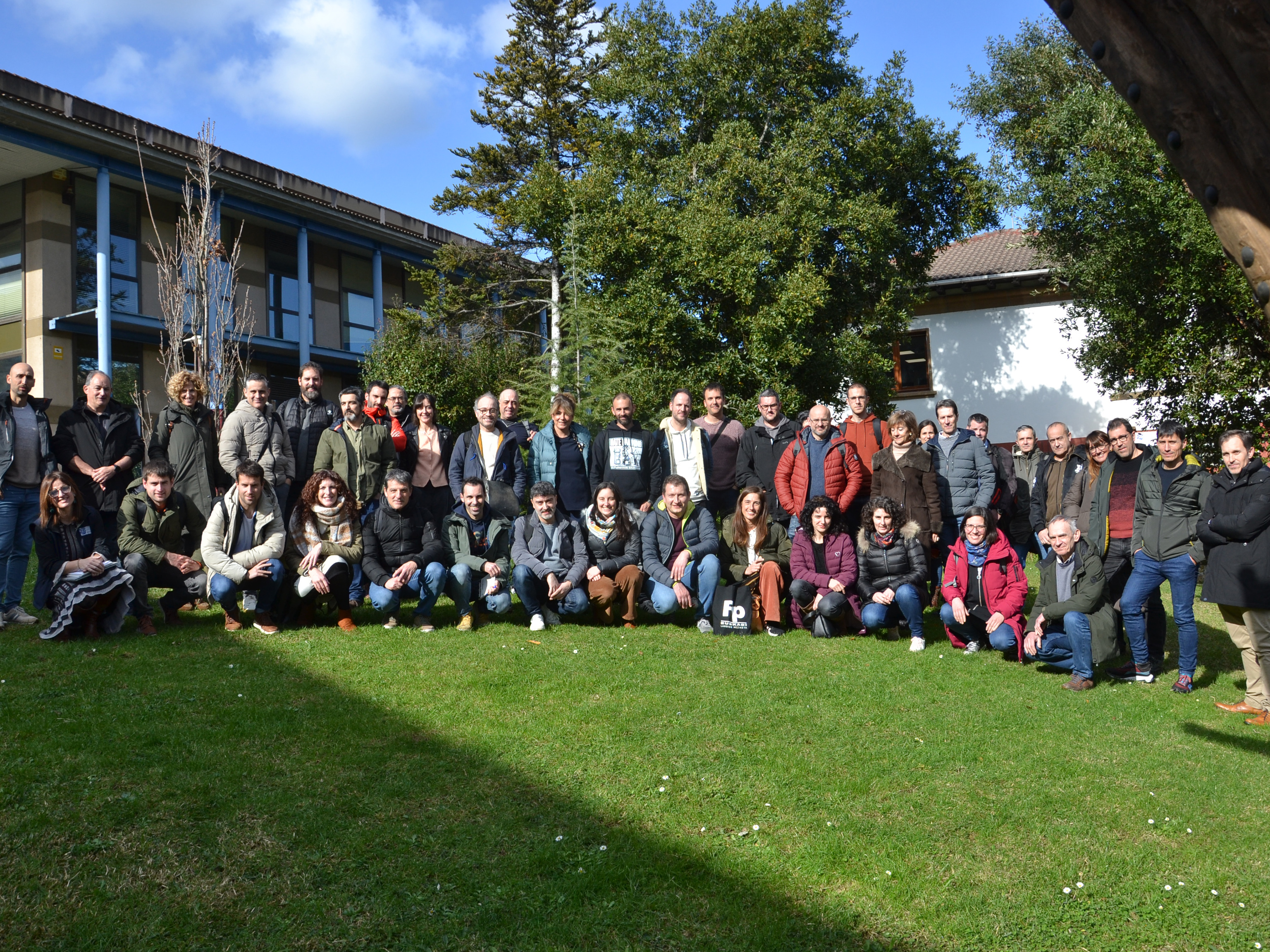


Somorrostro, together with Tknika and two other vocational training centres in the Basque Country, has launched an innovation project to be carried out during the 2026/2027 academic year. Entitled ‘Inclusive Logistics: Communicating with mobile robots via voice or sign language’, the initiative aims to transform the way people interact with autonomous mobile robots, known as AMRs.
The project is being carried out in collaboration with CPIFP Arratiako Zulaibar and CPIFP Maristak Durango, with Somorrostro acting as the lead centre. Its main objective is to create an interface that enables industrial robots to be controlled via voice commands and sign language, without the need for complex technical consoles or specialist knowledge.
To this end, artificial intelligence technologies relating to natural language processing and computer vision will be utilised. The system will be capable of interpreting verbal instructions and technical gestures and converting them into commands for the robots. Furthermore, the project will utilise the open standard VDA 5050, which facilitates communication between mobile robots from different manufacturers.
The proposal addresses one of the major challenges of Industry 5.0: ensuring that technology adapts to people, rather than the other way round. The use of more natural forms of communication can facilitate the participation of people with disabilities and help to create more accessible and inclusive industrial environments.
The project will also pay particular attention to gender equality. The data used to train the speech recognition models will be analysed and balanced, with the aim of reducing any potential differences in accuracy between female and male voices.
Throughout the academic year, there will be various phases of research, development and validation in real-world environments. The course will also benefit from the collaboration of companies in the fields of robotics and industry, which will provide advice, materials and facilities for testing.
One of the key elements will be the transfer of results. Plans include creating an ETHAZI challenge, developing training materials for Moodle, and publishing the code and technical documentation openly via GitHub. In this way, other vocational training centres and small businesses will be able to learn about and benefit from the project’s progress.
Over the coming months, we will be sharing updates on the progress of this initiative and the lessons learnt from this collaborative work between centres, businesses and Tknika.